Bedroom
17 Cozy Bedroom Ideas for a Warm and Relaxing Space
Cozy bedroom ideas that make a room feel warmer without clutter: layered bedding, soft lighting, quiet color, and small details that help you unwind.

Cozy is not the same as cluttered. The bedrooms that feel warm and restful usually share a simple set of qualities: soft light, quiet color, comfortable layers, and a layout that keeps the bed as the calm center of the room. A cozy bedroom is not created by adding more things. It is created by choosing the right things and giving them room to breathe.
These ideas work in large bedrooms and small ones, in rentals and in homes you own. Some cost nothing more than an afternoon of rearranging. Others are worth saving for. Start with the first section and work outward.
Set the mood with color and light
1. Choose a warm, muted wall color
Cool whites and sharp grays can feel crisp in a living room but clinical in a bedroom. Warm neutrals — oatmeal, clay, soft mushroom, pale sand — hold the evening light gently and make the room feel enclosed in a good way. If you prefer white, choose one with a warm undertone rather than a blue one.
Paint the ceiling the same color as the walls in a small bedroom. The lack of a hard line between wall and ceiling makes the room feel taller and softer, and it reduces visual noise.
2. Put the bedside lamps on their own circuit
Overhead lighting is useful for cleaning and finding things, but it is rarely flattering and rarely restful. Bedside lamps on a separate switch — or a smart plug — let you turn the room down without turning it off. This one change often does more for the atmosphere than a new duvet.
3. Use warm-white bulbs
Look for bulbs in the 2700K range for bedside and accent lighting. Cooler bulbs can make wood and textiles look gray. If you need brighter light for reading, use a dedicated reading lamp rather than raising the brightness of the whole room. The Sleep Foundation’s bedroom environment guidance is a useful primer on light, temperature, and quiet.
4. Add a low light source
A small lamp on the floor, a candle-style sconce, or a dimmable night light near the baseboard creates a pool of light that feels grounded and intimate. The goal is to avoid a single bright source at eye level. Layering light at different heights makes the room feel deeper.
5. Let the curtains be soft, not heavy
Sheer or lightweight linen curtains diffuse daylight and soften the edges of the window. If you need darkness for sleep, add a blackout blind behind the curtain rather than choosing a heavy, dark curtain that dominates the room during the day. Two layers give you control without sacrificing softness.
Layer the bed
6. Start with a good base layer
A fitted sheet in a natural fiber — cotton, linen, or a blend — is the foundation of a comfortable bed. Choose a light, warm neutral that works with the rest of the room. The base layer does not need to be decorative; it needs to feel good and wear well.
7. Add a washed linen duvet
Linen has a relaxed, slightly rumpled texture that reads as cozy rather than formal. A duvet in oatmeal, stone, or soft clay layers beautifully over white sheets and looks better after use, not worse. If linen feels too expensive, a cotton percale or a linen-cotton blend is a good compromise.
8. Fold, don’t spread
Instead of spreading the duvet flat across the whole bed, fold it back by about a third. This reveals the sheet layer, adds visual depth, and makes the bed look inviting rather than made for a photograph. It also makes it easier to get into bed at night.
9. Use two or three cushions, not seven
A pile of decorative cushions is one of the fastest ways to make a bedroom feel fussy. Two large pillows plus one smaller accent cushion is usually enough. If you love pattern, let the accent cushion carry it and keep the rest solid.
10. Add a throw at the foot of the bed
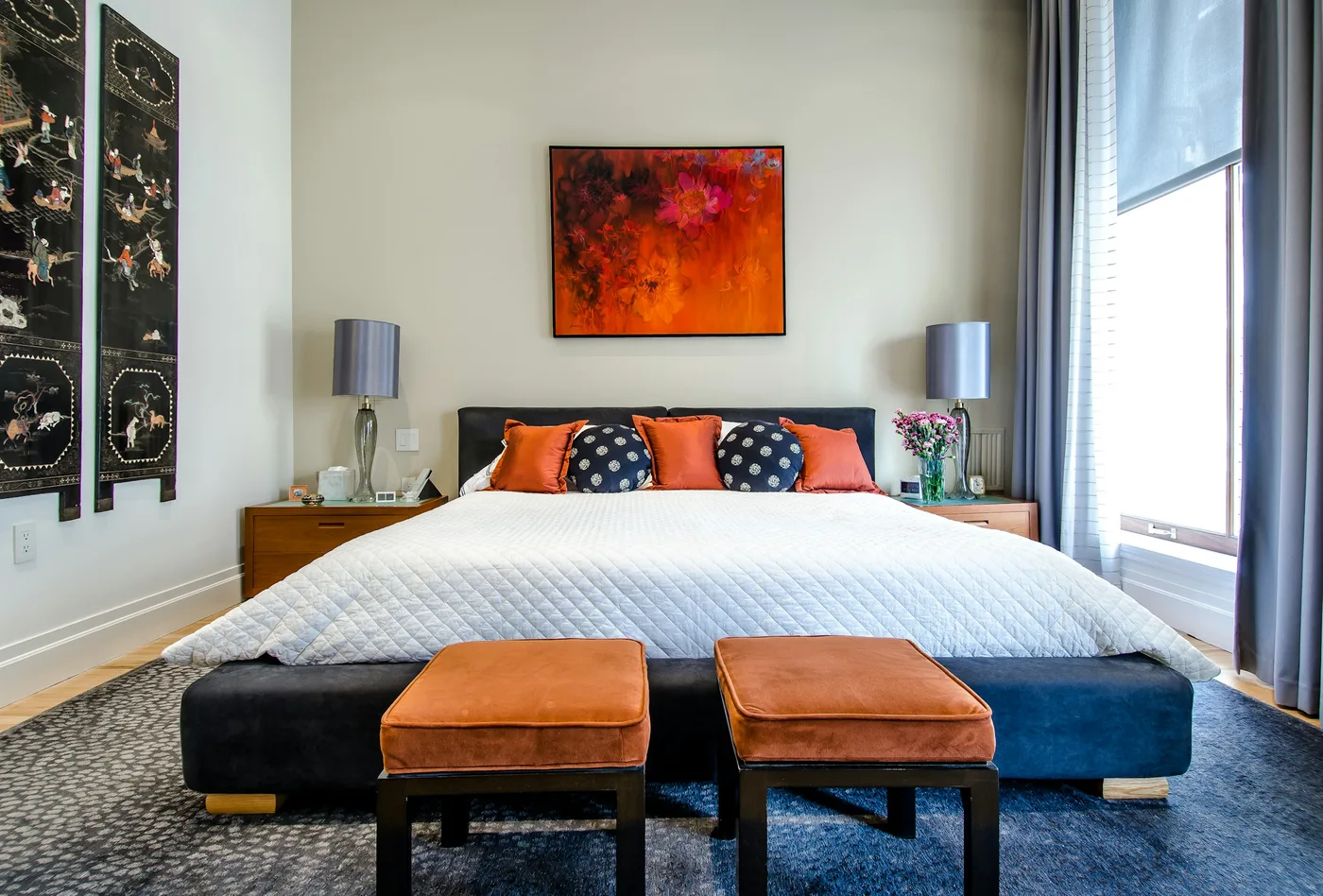
A wool or cotton throw folded across the end of the bed adds texture and a layer you can pull over your feet on a cold evening. Choose a color that repeats something else in the room — the wood tone, the curtain, or a print on the wall — so it feels connected rather than random.
Rethink the furniture and layout
11. Give the bed a clear wall
The bed is the visual anchor of the room. If it is pushed into a corner or squeezed between two tall wardrobes, the room feels unsettled. Center it where possible, or align it with the main sightline from the door. In a small room, a corner placement can work if you keep the wall above the bed calm.
12. Choose a low-profile bed frame
A low wooden or upholstered frame makes the ceiling feel higher and the room feel calmer. Tall headboards can be beautiful, but they add visual weight. If you want height, use a slim headboard and keep the rest of the wall simple.
13. Add a small chair or bench
A chair, bench, or ottoman at the foot of the bed gives you a place to sit while putting on shoes and somewhere to put a bag or a folded throw. It also breaks up the long line of the bed. In a tight room, a narrow bench is more useful than a full chair.
14. Make room for one bedside surface each
Both sides of the bed benefit from a surface for a lamp, a book, and a glass of water. If there is no room for a full nightstand, use a wall shelf, a slim stool, or a small floating drawer. The goal is to keep the floor clear and the surface uncluttered.
Finish with quiet details
15. Hang one piece of art you actually love
A bedroom is a private room, so the art can be more personal than in a living room. Choose one piece that makes you feel calm or curious rather than filling every wall. Hang it at a comfortable viewing height from the bed, and leave space around it.
16. Add a rug that feels good underfoot
A wool or cotton rug beside the bed makes the first step out of bed softer and warmer. It also absorbs sound, which makes the room feel quieter. Choose a size that extends at least 18 inches beyond the bed on each side, or use two runners if the room is narrow.
17. Keep a tray or basket for everyday things
A small tray on the dresser or a woven basket beside the bed gives books, glasses, and chargers a home. Without a designated place, these items spread across every surface. The tray does not need to be fancy; it needs to be easy to use.
Common mistakes to avoid
- Treating the bedroom like a second living room. Exercise equipment, work laptops, and laundry piles all compete with rest. Keep the room’s primary job visible.
- Using too many patterns. A patterned duvet, patterned curtains, patterned rug, and patterned cushions can make a small room feel restless. Let one pattern lead.
- Choosing a dark paint color without testing it. Deep colors can be wonderfully cozy, but they need enough light and the right undertone. Test at night and in the morning.
- Forgetting the bed’s proportions. An oversized bed in a small room leaves no space for bedside tables or a comfortable path. Measure the room with the bed footprint taped out.
- Buying decorative pillows before the duvet. The base layers set the color story. Accents are easier to choose once the large surfaces are settled.
Frequently asked questions
How do I make a bedroom cozy on a small budget?
Start with lighting and bedding. Warm-white bulbs, a second lamp, a washed cotton duvet, and a throw will change the feel of the room for relatively little money. Rearranging the bed and clearing the bedside surfaces costs nothing and often makes the biggest difference.
Is a dark bedroom color a good idea?
It can be, especially in a room used mainly at night. Deep olive, charcoal, and muted navy can feel enveloping and calm. Test the color on a large sample and check it in both daylight and lamplight. If the room is small or short on natural light, a warm mid-tone may be easier to live with.
How many pillows should be on a bed?
Two sleeping pillows plus one or two accent cushions is a practical default. More than that becomes a daily ritual of removal and rearranging. Choose accent cushions that are comfortable enough to use, not just decorative.
A room that helps you switch off
Cozy is a feeling, not a shopping list. Warm light, soft layers, a clear bed wall, and a place for everyday objects will do more than any single purchase. Make one change this week — move a lamp, wash the linen, clear the nightstand — and notice how the room responds. For a quieter, more edited approach, see our guide to minimalist home decor. If your bedroom is part of a studio, these layout ideas will help you define a sleeping zone without walls.