Living Room
15 Small Living Room Ideas That Make Any Space Feel Bigger
Practical small living room ideas that genuinely create space: smarter seating, light-friendly color, slim furniture, and storage that stays out of sight.
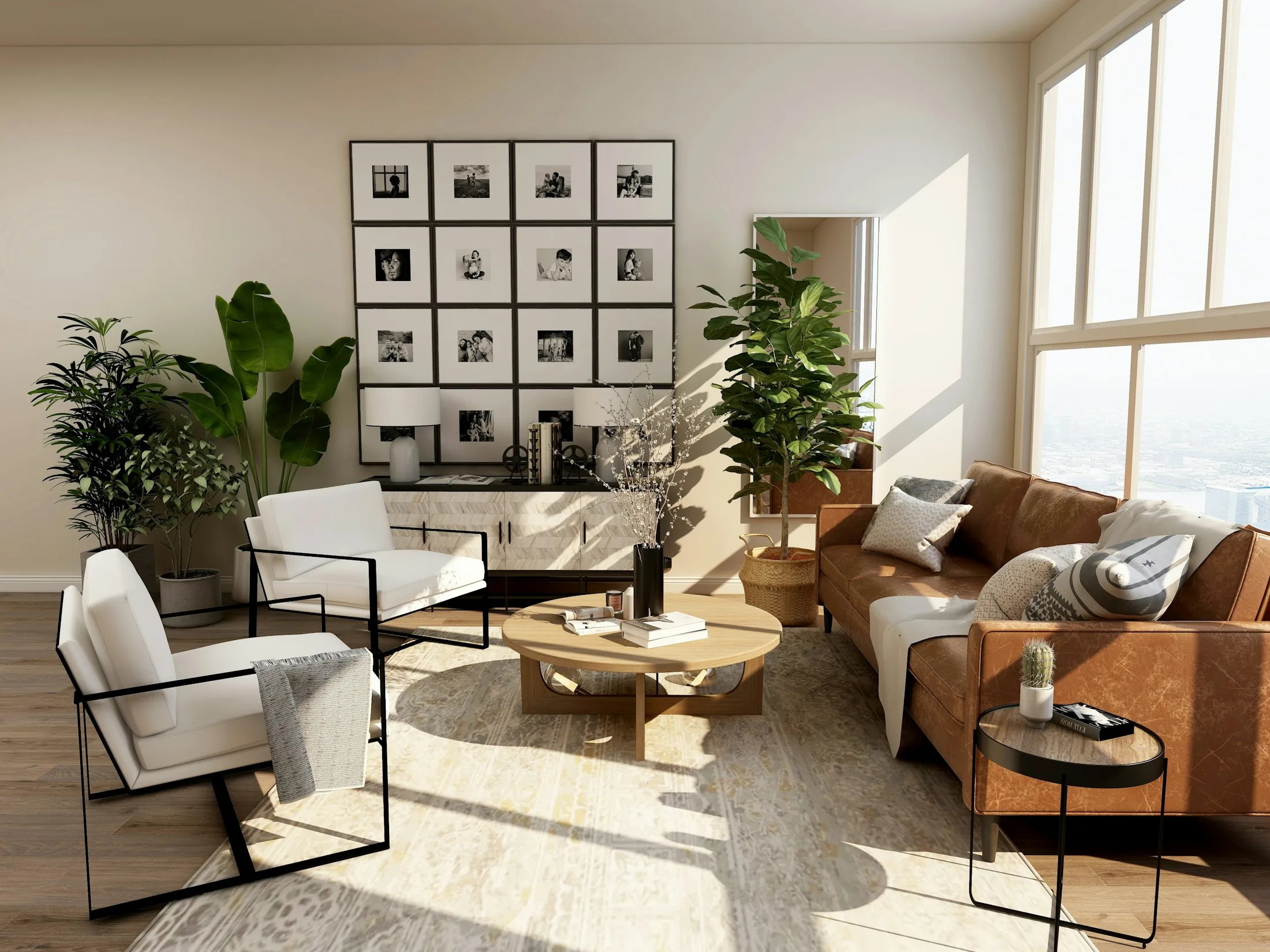
A small living room is not a problem to be solved with tricks. It is a room with a clear brief: everything in it has to work a little harder, and everything visible has to earn its place. The most successful compact living rooms tend to feel calm rather than clever. They are easy to walk through, easy to sit in, and easy to tidy at the end of the day.
The ideas below are arranged in the order that matters: layout first, then light and color, then furniture, then the finishing layer. None of them require a renovation, and most can be done over a weekend with a tape measure and a willingness to move things twice.
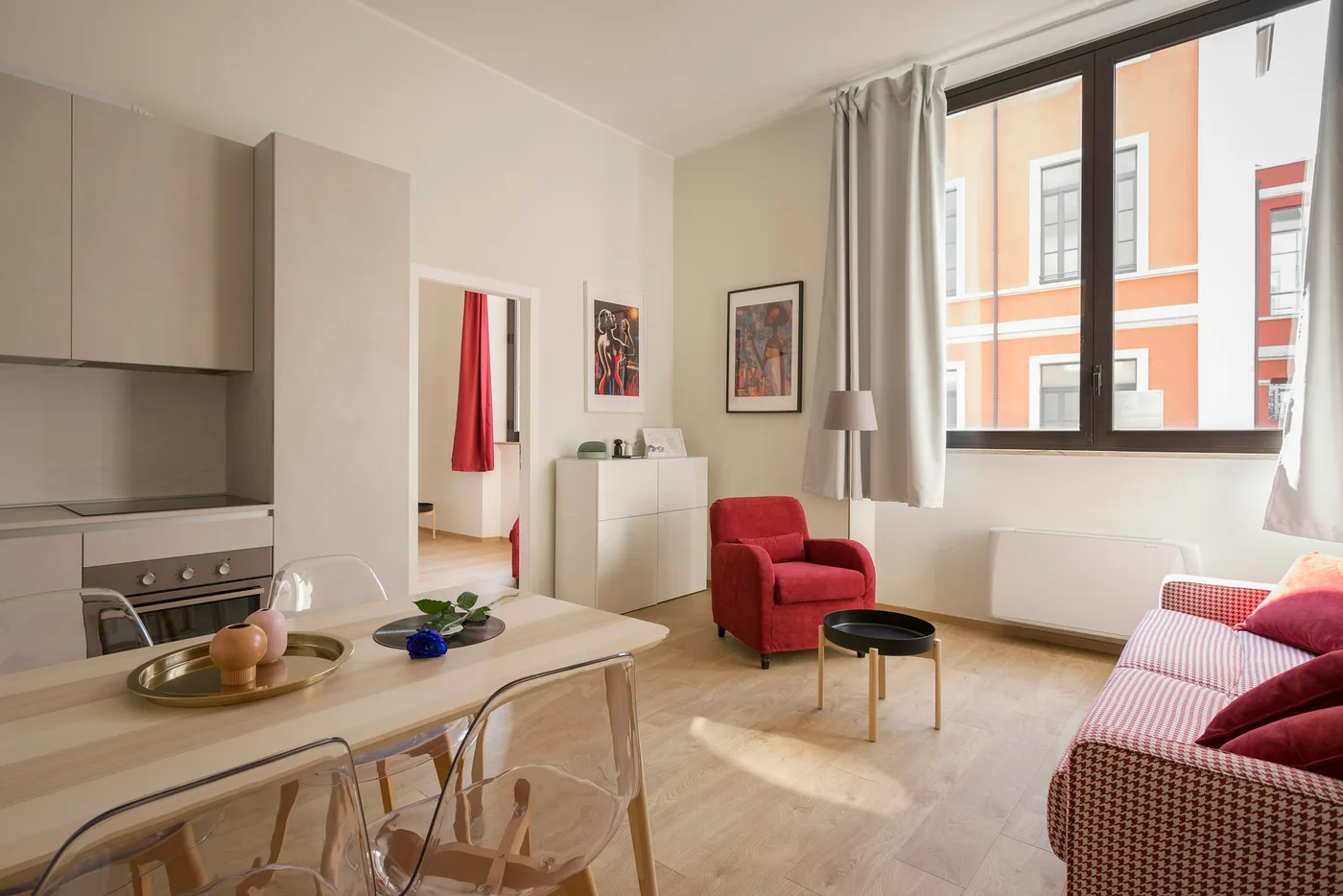
Start with the layout, not the shopping
1. Anchor the seating area on one rug
A rug is the simplest way to tell the eye where the living room begins and ends, especially in an open-plan space. Choose a size that lets at least the front legs of every seat sit on the rug. A rug that is too small makes the furniture feel scattered; a rug that is generous enough to hold the group makes the same furniture feel deliberate.
In a narrow room, a rectangular rug running along the long axis will stretch the perceived width. In a square room, a round rug can soften the hard corners and reduce the number of visual lines competing for attention.
2. Float the sofa slightly away from the wall
Pushing every piece against the wall feels efficient, but it usually creates a wide, unusable middle and a room that reads as a corridor. Pulling the sofa forward by even 10 to 15 inches can create a defined conversation zone, a place for a slim console behind it, and a more generous sense of depth.
You do not need a large gap. The goal is simply to let the sofa exist as a piece of furniture rather than as wallpaper. If the room is very narrow, keep the walkway behind the sofa to at least 30 inches so it remains genuinely usable.
3. Protect one clear path through the room
Every compact living room needs one obvious route from the door to the window, the balcony, or the next room. Furniture should not sit in the middle of that line. When the path is clear, the room feels larger without anything being removed.
Walk through the space at normal speed and notice where you turn your shoulders or step around a corner. Those are the places to edit. A side table can move; a badly placed armchair usually can too.
4. Use a slim console behind the sofa
If the sofa floats, the space behind it can become useful rather than wasted. A shallow console — around 12 to 14 inches deep — holds a lamp, a few books, and a tray for keys without blocking the walkway. It also gives the back of the sofa a finished look.
Choose a console with open legs rather than a solid box. Being able to see the floor continuing underneath keeps the visual weight low.
Work with light and color
5. Choose a warm, low-contrast neutral
Small rooms benefit from fewer visual interruptions. A warm off-white, soft sand, or pale greige on the walls reduces the contrast between surfaces and makes the boundaries of the room feel less abrupt. This is not about making a room look clinical; it is about giving the eye fewer edges to process.
Test paint samples on the actual wall, next to the window and in the corner, at different times of day. A color that looks warm and creamy in the store can turn cool and gray in north-facing light. Paint companies such as Benjamin Moore publish large palettes that are useful for comparing undertones before you commit.
6. Match the curtains to the wall
A curtain that blends with the wall color extends the visual height of the room and makes the window feel larger. Hang the rod close to the ceiling and extend it beyond the window frame so the curtains can stack to the sides without covering the glass.
If you want pattern or a stronger color, use it on a cushion, a throw, or a single piece of art rather than on a large, light-blocking surface. Heavy, dark curtains in a small room can swallow the daylight you are trying to maximize.
7. Layer three light sources
One ceiling light flattens a room and leaves corners dark. Aim for three sources at different heights: a ceiling or pendant light for general illumination, a floor lamp beside the main seat, and a table lamp or wall sconce in a secondary corner. Put them on separate switches where possible so you can change the mood without moving furniture.
Warm-white bulbs — around 2700K to 3000K — usually feel more comfortable in a living room than cool white. If you read or work in the room, add a dedicated task light rather than making the whole room brighter.
Choose furniture that fits the room
8. Look for a sofa with exposed legs
A sofa that sits on visible legs lets light and floor continue underneath it, which makes the piece feel lighter in the room. A skirted or low-slung sofa can be comfortable and elegant, but in a tight space it tends to read as a solid block.
Seat depth matters as much as overall width. A deep sofa may be wonderful in a large room but can leave less floor space for a coffee table and walkway in a small one. Our guide to choosing the right sofa walks through the measurements in more detail.
9. Use a round or oval coffee table
Rectangular tables are efficient, but their corners create hard edges in a compact room. A round or oval table softens the center of the seating group, makes it easier to walk around, and reduces the chance of bruised shins in a narrow space.
If the room is too small for a full coffee table, use two small nesting tables or a single narrow bench. The point is a surface for a cup and a book, not a permanent obstacle.
10. Add a slim chair instead of a second sofa
Two sofas rarely make a small living room feel generous. A pair of comfortable chairs, or one chair and a bench, gives you flexible seating without doubling the visual weight. Chairs can be pulled into the conversation when guests arrive and moved aside when the room needs to breathe.
Choose chairs with a narrow profile and a comfortable seat height. A low, deep lounge chair may look beautiful but can be difficult to get out of and may take up more floor space than its footprint suggests.
Finish with storage and detail
11. Go tall with shelving
Vertical storage uses the height of the room rather than its floor area. A tall, narrow bookcase can hold books, boxes, and a few objects while keeping the footprint small. Keep the lower shelves for heavier, less attractive items and the eye-level shelves for the things you actually want to look at.
Open shelving can become visual noise if it is too full. Edit regularly, leave some empty space, and use matching boxes for anything that does not deserve to be on display.
12. Use a lidded ottoman as a dual-purpose piece
An ottoman with a lid can serve as a coffee table, an extra seat, and a place to hide blankets, games, or remote controls. Choose one with a firm top if you plan to put drinks on it, and check that the lid is easy to lift with one hand.
This is the kind of piece that earns its space in a small room, but only if it is genuinely comfortable to use. A beautiful storage box that is awkward to open will quickly become a permanent obstacle.
13. Hang one large piece of art rather than many small ones
A single generous artwork gives the eye one place to rest and can make a wall feel taller. A cluster of small frames can work beautifully, but in a compact room it often adds visual noise. If you have a collection you love, rotate it rather than hanging everything at once.
Hang the center of the piece at roughly eye level, and leave a little breathing room between the art and the furniture below. Art does not need to be expensive to be effective; a large print, a textile, or a framed poster can do the job.
14. Place a mirror opposite the window
A mirror reflects daylight and makes the room feel deeper, but placement matters. Opposite a window, it can double the light; on a dark wall, it may simply reflect a dark corner. A simple, well-proportioned mirror is usually more effective than an elaborate frame that draws attention to itself.
If you are renting and cannot hang a heavy mirror, a full-length leaning mirror can work, provided it is stable and safely positioned away from walkways.
15. Keep some floor visible
The floor is part of the visual space of a room. When every inch is covered by furniture, rugs, baskets, and plants, the eye has nowhere to travel. Aim to keep a visible band of floor around the main seating group and along the main path.
This does not mean emptying the room. It means choosing fewer, larger pieces over many small ones, and being honest about whether the fifth side table is adding anything beyond another surface to tidy.
Common mistakes to avoid
- Buying furniture before measuring the room. A sofa that fits the wall may still block the window, the radiator, or the only walkway.
- Choosing a sectional for a narrow room. Sectionals are efficient in open spaces but can trap the layout in a small one. Measure the return and the walkway before committing.
- Using too many small patterns. A dozen patterns at close range create visual clutter. Let one pattern lead and keep the rest solid or subtly textured.
- Blocking the main light source. A tall bookcase in front of a window is a permanent loss of daylight. Place storage on solid walls instead.
- Styling before living. Live in the room for a week before buying the final layer of cushions, trays, and objects. The room will tell you what it actually needs.
Frequently asked questions
Can a small living room have a sectional sofa?
Yes, if the return does not block the main walkway and the room has a clear corner for it. Measure the full footprint, including the chaise or return, and tape it on the floor before buying. In a very narrow room, a standard sofa with a movable ottoman is usually more flexible.
What color makes a small living room look bigger?
There is no single magic color, but low-contrast schemes generally make a room feel more open. Warm off-whites, soft sand, pale greige, and light sage all work well when walls, curtains, and large furniture sit in a similar tonal family. Contrast is better used in small doses through art, wood, and textiles.
How much space should I leave around a coffee table?
Allow roughly 14 to 18 inches between the edge of the coffee table and the sofa or chairs. This is enough room to get in and out comfortably without the table feeling disconnected from the seating. In a very small room, a narrow bench or nesting tables can provide the same function with less depth.
The room you actually live in
A small living room works best when it is designed around movement rather than appearance alone. Start with a clear path, anchor the seating on a rug, let the light in, and choose furniture that shows a little floor beneath it. The result may not look like a showroom, but it will feel like a room you can use every day — which is the point.
If your living room is part of a studio or open-plan apartment, the next step is zoning the space without walls. If you are still choosing the largest piece, our sofa guide will help you get the scale right before you commit.